


What are the most effective NLP techniques and patterns?
In Michael’s years of delivering top quality NLP training, he has discovered many techniques and exercises from a wide range of NLP and non NLP sources. Here he shares them with you. Remember NLP is often more about the development of techniques which come from attitude and modelling, than the techniques themselves.
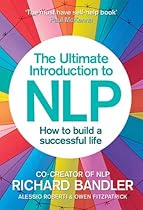
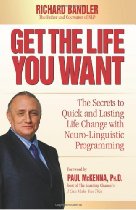
The following books by NLP co-creator, Richard Bandler, are excellent for the latest approaches to NLP (all links open in a new window).
Effective NLP Techniques and Patterns
Beating Stress Exercises
We all need a certain amount of stress to keep us healthy. However too much stress causes chemicals that destroy the brain. The art is to develop the ability to let go of excess stress. This is an excellent list of Beating Stress Exercises by Richard Bandler and Owen Fitzpatrick.
Belief Change
This is Richard’s classic approach to Belief Change, in this case to become an excellent learner.
Changing Feelings by Dissociation
Changing Feelings by Dissociation is a technique to reduce or eliminate unpleasant feelings by dissociation and submodality change.
Characteristics of Play
Play is an aspect of NLP Training and many NLP Techniques. According to Johan Huizinga play is a way of getting in touch with, and living out, the most essential and unique parts of ourselves. See Characteristics of Play.
Collapsing Anchors
Collapsing Anchors is an effective technique to lessen or remove the impact of an unwanted anchor.
Embedded Commands
Embedded Commands are commands which have been softened by embedding them in a particular sentence. This means that they are less likely to be noticed and it is more likely that the client will follow them.
Empowering Questions
Asking good, empowering questions (1) is important in many aspects of NLP. In this technique we’re using good questions to direct attention towards useful states, resources and actions. Empowering questions (2) is a more advanced version.
Fast Phobia Cure
The Fast Phobia Cure can be used for any real big fear. If the fear can be tested there and then - i.e. purely imagining the situation brings observable manifestations of the fear - so much the better.
Feed forward
Feed-forward is an approach developed by Marshall Goldsmith to make it easier for us continually to improve what we do. It also overcomes the challenge that we’re not to keen on either taking or giving feedback. See Feedforward.
Foolproof planning
Foolproof planning is a way to plan by thinking of how you will be when you’re totally on track, and then working backwards to the present - so that you can then do it forwards.
Future Pacing
Future Pacing is a powerful way of mentally rehearsing future events; both to improve your performance and how you feel about completing them.
Getting things Done
Getting things done is a technique to reduce or stop an emotion that’s currently blocking you - so that you can easily get things done.
Gratitude Inventory
The Gratitude Inventory shows you how to become more aware of what you have to be grateful for. This leads to a positive benefit to both health and happiness.
Logical Levels
Logical Levels can be used as an approach to explore any outcome. This may in itself produce a congruent way forward for or it will give information about where to go next.
Making Difficult Decisions
Making Difficult Decisions is a simple technique for making decisions. It ensures we give enough attention to every detail.
Meta Model
The Meta Model was the first major NLP language pattern series. It enables you to ask clean questions to explore your ‘Map’ and raise issues that were unconscious into consciousness. The model needs to be used with respect.
Mind Juggling
This is a great exercise for reducing anxiety and for balancing the brain hemispheres. See Mind Juggling.
Modelling
In some ways, modelling is THE key skill in NLP. Would it be useful if you could pick up others’ skills? Uses ‘strategy elicitation’, ‘logical levels’ and ‘true” NLP modelling.
NLP Presuppositions
NLP Presuppositions are not a technique as such but are useful beliefs for NLP and coaching. The emphasis being on useful and pragmatic rather than true.
Outcomes
Well formed outcomes help you to think about what you want in such a way that it becomes easier and more fun to achieve. Alternatively, they may help you realise that you actually want something very different, and so save you from trying to achieve them. Richard now talks in terms of direction rather than outcomes.
Overcoming overwhelm
This overcoming ovewhelm process will assist you in identifying overwhelm and at the same time facilitate rapport. It allows you to pace the client and lead them to a resourceful state where they can take responsibility and where you can help them set positive outcomes.
Perceptual Positions
Perceptual positions is a useful technique to understand someone else’s point of view.
Planning to Succeed
Planning to succeed is a powerful visual technique to help you plan an empowering and successful future.
Progressive Dissociation
Progressive dissociation is a slightly bizarre technique that can be used for curing headaches and similar discomforts.
Relaxation Response
The relaxation response is a powerful meditative technique.
Sleight of Mouth
Sleight of Mouth are reframing patterns that were identified by Robert Dilts from some of Richard Bandler’s language patterns. However they are applicable to many famous communicators. For verbal belief change (and arguments!)
Six step reframing
Six step reframing is gentle and respectful technique which can be used for any behaviour change. It is gentle and respectful in that any answer or solution doesn’t come from the practitioner’s or the client’s conscious mind - it comes from the client’s unconscious mind.
Stalking
Stalking is a fascinating NLP technique to calibrate your client to notice when they are just getting into ‘non-useful’ state, such as being over tired or exhausted - and when it’s still early enough to do something about it.
Stake Elicitation and anchor
State elicitation and anchor enables your client to access a useful state and then re access it at a future time of their choosing. Remember anchoring is easy if you have a strong state. The real skill is in eliciting strong and powerful states.
Success State Exercises
These are Very powerful exercises to lead you into great states which in turn will empower you in all aspects of life. See Success State Exercises.
Swish
Swish can be used to change a simple behaviour or a future state, for example feeling good when going on stage to present. Its really a more formalised way of doing a sub-modality change and linking it to a point in the future.
Timeline
Timeline is a way of exploring challenges and opportunities from different perspectives of time. It can be easier to come up with a plan to meet a challenge or opportunity from a perspective in the future when it has already been solved. It can be easier to resolve an issue which happened in the past from the perspective of going back to that time.
Visual Squash (New)
This is a highly recommended and brilliant adaptation of the the original ‘Visual Squash’ technique. The new Visual Squash is for goal setting.
Walking State
Walking state is a technique that enables your client to prepare and rehearse for a meeting. It will have a far greater positive impact on the result than the majority of rehearsal approaches. It will also introduce the concept of the huge choice of useful states available to all of us.
NLP Essentials
NLP essentials are short reminders for our practitioner and master practitioners
Certification Presentation
Daily Questions
Hypnosis
Hypnosis Session Structure
Modelling
Storytelling
NLP Videos
Short videos exploring aspects of NLP
NLP Video 1 | Introduction
NLP Video 2 | What is NLP?
NLP Video 3 | Success Quiz
NLP Video 4 | Frames
NLP Video 5 | Direction
NLP Video 6 | Current Direction
NLP Video 7 | Plan
NLP Video 8 | Review
NLP Video | Benefit of 1:1 Training
You may want to have a look at our glossary of NLP terms
FREE NLP Video Training
You can look and listen to 10 hours of free NLP Training on video.
NLP Training Video
NLP Hypnosis Video
NLP Coaching Video
NLP Success Video
To find out more select one of the contact methods below:
- Telephone 07944 388621 with your name, how to reach you, and the reason for the call.
- Book a telephone or Skype consultation in Michael’s on-line diary.
- Complete the on-line NLP training courses contact form.